Application Areas of Artificial Intelligence
Healthcare
Medical image analysis, drug development, and personalized treatment for patients
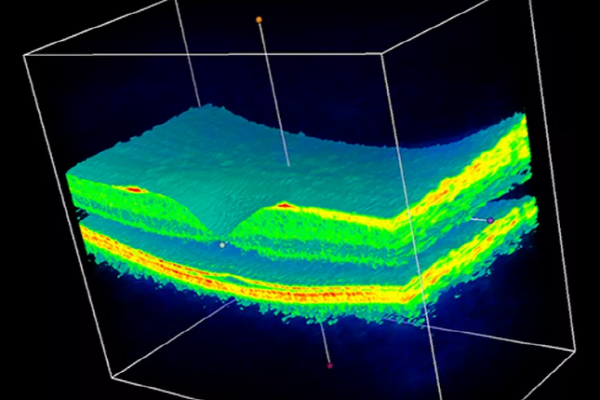
- Example: AI developed by Google’s DeepMind is being used to help detect eye diseases early.
- Image source: Robot Newspaper, “Google DeepMind Uses Artificial Intelligence for Early Diagnosis of Eye Diseases”
Real-World Examples of Medical AI
- Image diagnosis: AI reads X-ray and MRI images to detect early-stage cancer. At one hospital in the United States, the reading error rate decreased by 20%.
- Drug development: Candidate substance discovery, which traditionally took more than 10 years, can be shortened to several months with AI-based methods.
- Personalized treatment: Analyzes a patient’s genetic information and recommends the most effective anticancer drug.
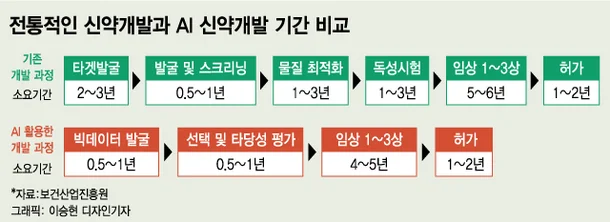
- Figure 3: Comparison of traditional drug development processes and AI-based processes
Autonomous Driving
Autonomous driving technology aims to recognize road conditions in real time, determine the optimal driving strategy based on them, and manage traffic flow efficiently. It detects the surrounding environment through sensors such as cameras, radar, and LiDAR, and AI algorithms analyze this information to automatically adjust vehicle speed, direction, following distance, and more. This can reduce traffic accidents, improve road efficiency, and strengthen the safety of drivers and pedestrians.
Finance
In finance, AI is applied to many areas, including fraudulent transaction detection, automated investment strategies, and risk management. In fraud detection, it analyzes abnormal transaction patterns in real time to identify suspicious transactions. In automated investment strategy, it optimizes portfolios based on market data. AI is also used to help financial institutions predict and manage credit risk, market risk, and other risks, improving both financial stability and operational efficiency.
Manufacturing
In manufacturing, AI is applied to smart factories, predictive maintenance, automated quality control, and more. Smart factories connect production equipment and logistics systems with AI, enabling efficient process management. Predictive maintenance analyzes sensor data to predict equipment failures in advance and optimizes maintenance plans, reducing costs and time. Automated quality control detects defects that may occur during production in real time and improves product quality.
Education
In education, AI is used to provide personalized learning, automated grading, intelligent tutoring systems, and more. It analyzes each student’s learning level and pace to recommend personalized learning content, and it automatically grades assignments and exams to reduce teachers’ workload. Intelligent tutoring systems also analyze students’ learning patterns, reinforce weak areas, and provide real-time feedback to maximize learning effectiveness.