What Is a Timestamp in IT?
What Is a Timestamp?
A timestamp literally means a time mark. It refers to the date and time stamped on a document, and in IT it refers to date and time information assigned and stored as one of the properties of a file or data.
Origin of the Timestamp
The timestamp is said to have originated from rubber stamps once used in the West to indicate the time when documents such as mail were sent or received. The date was placed in the center, and a triangle at the top pointed to a specific time around a circle representing 24 hours.
Stamping this mark on paper to indicate a specific time has become, in today’s IT systems, a way of representing elapsed time based on the epoch.
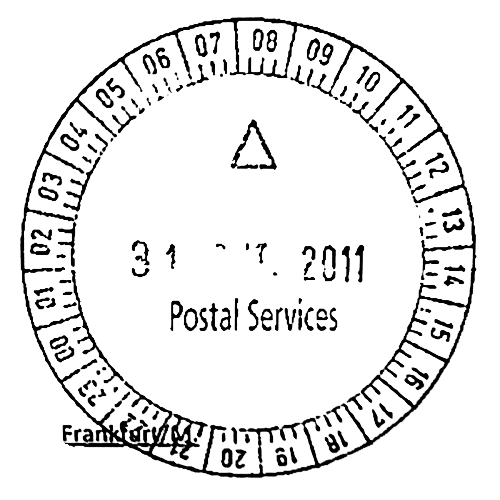
Image source: wikimedia
Timestamps in File Systems
In an operating system’s file system, creation time, last modification time, and last access time are recorded as kinds of properties for files or directories (folders). These are called timestamps.
The file system automatically assigns and updates them when files or directories are created, written, or read. Based on this information, files can be sorted by creation order or update order, and you can check which of the same files in different locations was updated most recently.
Time Certification for Electronic Documents
A mechanism that proves an electronic document existed at a specific date and time in the past and has not been tampered with up to the present is called time certification. The date and time information assigned at that point is called a timestamp.
Like digital signatures, it uses a trusted third party called a Time-Stamping Authority (TSA). The document creator sends the hash value of the document data, which is short data representing its characteristics, to the certification authority. The certification authority then generates another hash value from the received date and time and the document hash value.
Later, a person who wants to verify the document calculates a hash value from the document they have and the date and time claimed by the creator. If it matches the hash value from the time of issuance, the person can confirm that the document actually existed when the timestamp was issued and has not been tampered with since.